Fit, measured before the return
Returns are not chiefly a logistics issue or a customer service issue. The underlying issue is measurement. Thinx3D links a shopper's body geometry with the garment under consideration before purchase.
Fit returns begin with geometry
Shivang Desai worked in computer vision and depth estimation for industrial inspection. He noticed that photogrammetric methods used to measure industrial objects had no equivalent built for consumer apparel when he began considering the problem from an online shopper's perspective.
He co-founded Thinx3D in 2023 around a simple premise: a smartphone camera can provide depth information when its visual signal is properly extracted. Making that work across body types and clothing conditions required more than one discipline. A computer graphics specialist and an apparel operations specialist became part of the founding team.
Thinx3D incorporated in Los Angeles with a small engineering team building its photogrammetry pipeline.
An internal study of 600 participants found 1.8 cm mean absolute error across chest, waist, and hip measurements.
The first Shopify app launched, letting merchants embed the Thinx3D widget through the App Store.
A $100K angel round funded the early-access program and garment spec library expansion.
The first brand cohort saw a 41% reduction in size-related returns over 90 days after deployment.
Engineering for visual fit
This is not a generic AI or fit-marketing company. Thinx3D is a focused computer vision team applying photogrammetry to a specific apparel deployment.
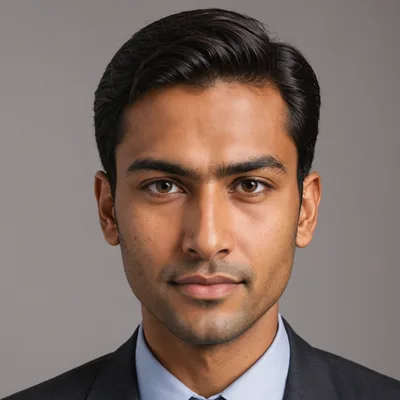
Shivang Ajay Desai brings a computer vision and depth estimation background. He founded Thinx3D around the gap between industrial photogrammetry and consumer apparel, and leads product, strategy, and partnerships.

Luis Reyes works across parametric 3D modeling, mesh optimization, and computer graphics. He built the body reconstruction pipeline and garment spec comparison engine, and leads engineering and model accuracy.

Sophie Winters brings apparel e-commerce operations and returns logistics experience. She connects the technical model with brand-side operational reality, leading onboarding and brand relationships.
The standards behind our work
Our numbers come from validation studies or measured pilots. Projections do not become results through presentation, and figures are not inflated for effect.
Body measurements are highly sensitive. Our pipeline processes them ephemerally by default and does not retain biometric data without explicit consent.
Early access stays limited so integration happens alongside each brand partner. Close collaboration reveals where the engine needs to improve.
An engine that handles only a narrow range of bodies is not doing the job. Validation and test sets should reflect the shapes, sizes, and demographics of people who shop online.
Build better fit with us
Apparel brands can pilot Thinx3D. Engineers and researchers can join us in tackling difficult 3D body modeling problems.